Emergency water removal, Duluth and Gwinnett County
Water Extraction in Duluth, GA
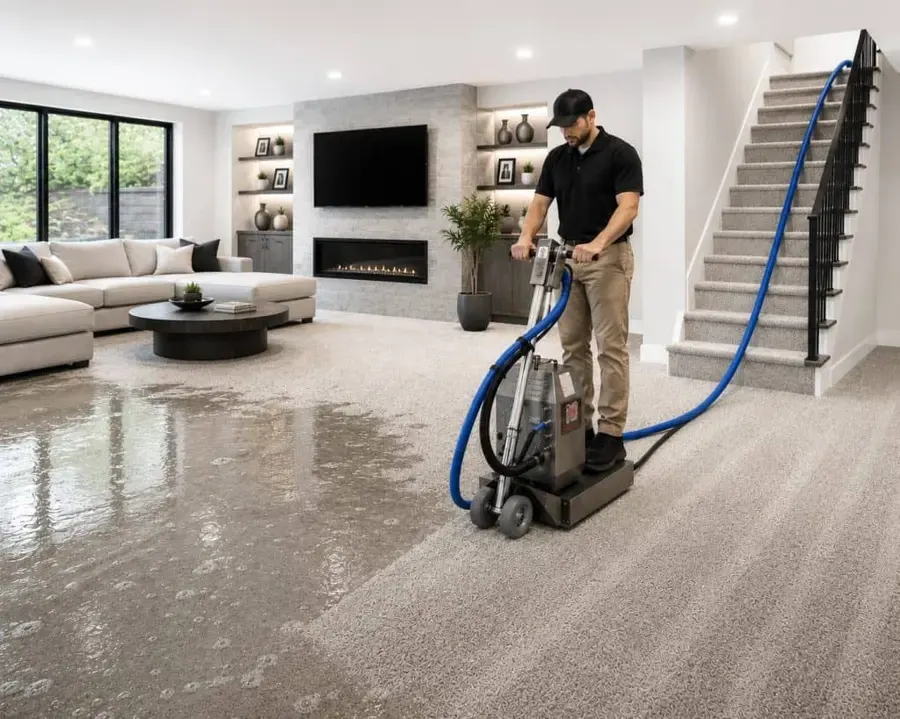
Standing water keeps soaking into subfloor, drywall and cabinets until it is pulled out. The extraction crew removes it with truck-mounted equipment and hands the room to the drying team the same visit.
(888) 532-4616Get the Duluth pump-out started- Truck-mounted extraction
- Moisture mapping first
- 24/7 dispatch
Do this first
First steps for water extraction in Duluth
- 1
Stop the source
Close the main shutoff, usually in the garage, basement or crawl-space entry in Duluth houses.
- 2
Kill power to wet circuits
Only if the panel sits in a dry spot. Stay out of water near outlets and cords.
- 3
Photograph before moving things
Wide shots of every wet room, then close-ups. The claim file starts here.
- 4
Lift what you can
Area rugs, boxes and furniture legs off wet carpet, then call.
How the work is done
How the restoration team handles water extraction
Rapid local response
The response team dispatches 24/7 across Duluth and Gwinnett County, with rapid local response on active water.
IICRC S500 drying standard
IICRC S500 is the industry drying standard. Structural drying, not just surface drying, with equipment sized to the room.
Claim-ready documentation
Moisture maps, daily drying logs and timestamped photos taken before any demolition go into the claim file.
Gwinnett water experts
Attic air handlers, polybutylene supply lines, daylight basements and red clay: the crews know how water moves in a Duluth house.
Typical cost ranges
What does water extraction cost in Duluth, GA?
In Duluth, GA, emergency water extraction typically runs $300 to $1,800 on its own and $1,500 to $6,000 once drying equipment is included. The drivers are the water category, the square footage that is wet, carpet versus hard floors, and how fast extraction started.
One room, clean water
$300 to $900
- Category 1 supply-line water
- Carpet or hard floor
- Extraction plus a moisture check
Several rooms or a level
$900 to $1,800
- Pad saturated under carpet
- Truck-mounted extraction
- Readings mapped room by room
Extraction plus drying
$1,500 to $6,000
- Air movers and LGR dehumidifiers
- Three to five drying days
- Daily logs for the claim
Ranges are typical, not quotes. For a closer planning number use the water damage cost calculator; the restoration contractor who responds sets the real scope after the walkthrough.
Water extraction is the first job on almost every loss in Duluth, whether the water came from a split supply line in a 1990s Sugarloaf two-story, a flooded daylight basement off Pleasant Hill Road or a condo along the Satellite Boulevard corridor. The extraction crew removes the bulk water so the drying team is working on damp material instead of pooled water.
Truck-mounted extraction versus a shop vac
A shop vac lifts the surface. A truck-mounted unit pulls water out of carpet pad and off the subfloor with far more suction, and the water leaves the building through the hose instead of being carried across the house in buckets. On carpet, the crew usually runs a weighted extraction tool that squeezes the pad from above.
- Carpet and pad: extracted in place when the water is Category 1 and drying starts early.
- Hardwood and laminate: extracted, then dried with specialty mats and air movers.
- Category 3 water: pad and other porous materials are removed, not dried.
What happens right after the water is out
Before any air mover goes down, the tech who does the walkthrough maps moisture with pinless meters and thermal imaging, because water travels under baseboards and into wall cavities where it cannot be seen. That map sets how many air movers and LGR dehumidifiers the rooms need. Duluth summers run humid, so dehumidification carries more of the load here than in a dry climate. Read more on how that works on the structural drying page.
When extraction is urgent
Mold can start inside 24 to 48 hours on wet drywall and pad, which is why EPA moisture guidance stresses drying wet materials quickly. If the water came from outside, Ready.gov flood safety advice applies before anyone walks through it. For water coming out of a failed tank, see water heater failure cleanup.
The order of work
How water extraction is handled in Duluth
- 1
Map the moisture
The tech who does the walkthrough maps moisture with pinless meters and thermal imaging, then sets the category and class of the loss before any equipment goes down.
- 2
Extract
The extraction crew pulls standing water with truck-mounted extraction so it leaves the house instead of wicking into the next room.
- 3
Dry the structure
The drying team sets air movers to each room's evaporation load and runs LGR dehumidifiers, which matters in a humid Georgia summer.
- 4
Verify dry
Crews log readings daily and pull equipment only when wet materials sit within 2 to 4 points of a dry reference material.
Areas served
Covered across Duluth and Gwinnett County
The Duluth restoration team works the whole city, from the Town Green and Pleasant Hill to Sugarloaf and the Chattahoochee side, and out to Suwanee, Johns Creek, Berkeley Lake, Peachtree Corners, Norcross and Lawrenceville.
Duluth ZIP codes 30095, 30096, 30097, 30098 and 30099 are all covered.
See every neighborhood and ZIP codeRelated
Related water damage services in Duluth
Answers
Water extraction questions, answered
Can wet carpet be saved after extraction?
Often, yes, when the water is Category 1 and extraction starts early. The pad usually dries in place under a weighted extraction tool and air movers. If the water was gray or sewage, or it sat for days, the pad comes out and the carpet is judged separately.
How much water can a truck-mounted unit remove?
Far more than household equipment. A truck-mounted extractor pulls water out of pad and subfloor rather than skimming the surface, and it sends the water outside through the hose, so the rest of the house stays dry.
Is extraction enough, or does the house still need drying?
Extraction removes the bulk water, but framing, subfloor and drywall still hold moisture. Air movers and LGR dehumidifiers finish the job, and the crew checks readings daily until materials reach the drying goal.
Should I use a wet vac before the crew gets there?
On a small clean-water spill, a wet vac on hard floors is fine if the power is safe. Stay off carpet over a saturated pad, and never vacuum water that may be sewage.
Does homeowners insurance cover water extraction?
Sudden and accidental water, like a burst supply line, is often covered after the deductible, while rising surface water usually falls under flood coverage. Coverage depends on your policy, so it is worth checking with your own insurer.
How long does extraction take in a typical Duluth home?
One or two rooms usually take a couple of hours of extraction work. A full finished basement or a whole floor takes longer, and drying equipment then runs for several days.
Emergency water removal, Duluth, GA
Standing water in your Duluth home?
Every hour it sits, more of it moves into the subfloor and walls. The extraction crew works day and night across Gwinnett County.