Daylight and walkout basements
Basement Flooding Cleanup in Duluth, GA
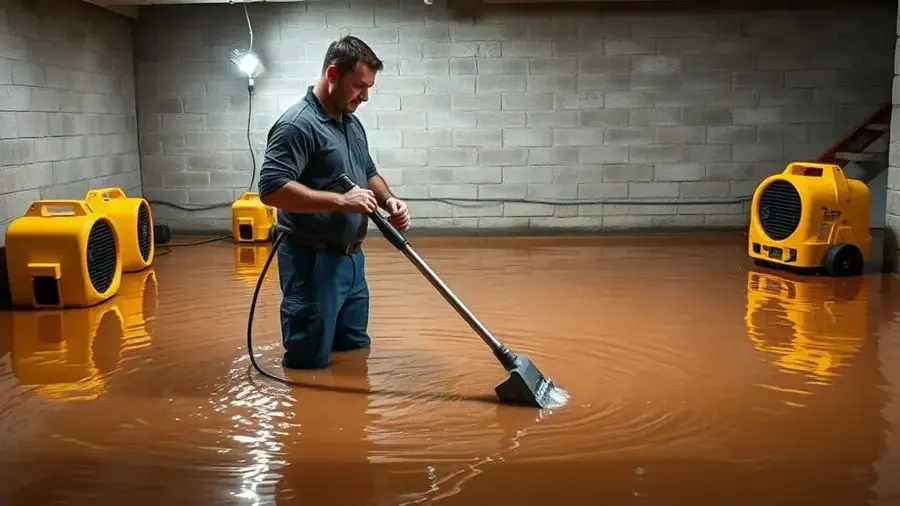
Duluth's sloped lots put a lot of homes over daylight basements, and red clay holds storm water right against those walls. The restoration team pumps out the water, removes what cannot be saved and dries the basement to a verified reading.
(888) 532-4616Flooded basement in Duluth? Call now- Pump-out and extraction
- Category checked first
- Daily moisture readings
Do this first
First steps for basement flooding cleanup in Duluth
- 1
Stay off the stairs if outlets are underwater
Water in contact with outlets or cords is an electrical hazard. Cut power at the panel only if you can reach it dry.
- 2
Find where it is coming in
Wall seepage, a floor drain, a failed pump or a plumbing leak each point to a different category of water.
- 3
Move stored items up
Boxes, rugs and electronics off the floor. Photograph them before they move.
- 4
Keep the upstairs doors closed
It keeps humid basement air from spreading while drying is set up.
How the work is done
How the restoration team handles basement flooding cleanup
Rapid local response
The response team dispatches 24/7 across Duluth and Gwinnett County, with rapid local response on active water.
IICRC S500 drying standard
IICRC S500 is the industry drying standard. Structural drying, not just surface drying, with equipment sized to the room.
Claim-ready documentation
Moisture maps, daily drying logs and timestamped photos taken before any demolition go into the claim file.
Gwinnett water experts
Attic air handlers, polybutylene supply lines, daylight basements and red clay: the crews know how water moves in a Duluth house.
Typical cost ranges
What does basement flooding cleanup cost in Duluth, GA?
Basement flooding cleanup in Duluth, GA typically runs $1,500 to $9,000. The main drivers are how deep the water was, whether the basement is finished, the category of water (storm runoff is often Category 3), and how fast drying started.
Unfinished, shallow water
$1,500 to $3,000
- Pump-out and extraction
- Concrete and block drying
- Dehumidifiers and readings
Finished basement
$3,000 to $6,500
- Carpet and pad decisions
- Drywall flood cuts
- Cavity drying
Storm or sewage water
$6,500 to $9,000+
- Category 3 removal
- Antimicrobial treatment
- Containment and HEPA scrubbers
Ranges are typical, not quotes. For a closer planning number use the water damage cost calculator; the restoration contractor who responds sets the real scope after the walkthrough.
A lot of Duluth homes built in the 1980s and 1990s sit on sloped lots with a daylight or walkout basement on the downhill side. That design gives a lot of living space, and it also puts finished drywall and carpet right where water collects. Most basement floods here come from four places: seepage through the block walls after long rain, surface runoff coming in the walkout door, a failed sump or floor drain, or a plumbing failure upstairs.
The category of water decides the plan
A water heater or supply-line leak is clean water, and most of a finished basement can be dried in place if the crew starts early. Surface runoff that crossed a yard, or water from a floor drain that backed up, is Category 3 and is treated like sewage: porous materials it touched are removed, not dried. The tech who does the walkthrough sets the category before anything else happens.
- Clean water: extraction, then air movers and LGR dehumidifiers, with carpet often saved.
- Storm or drain water: carpet, pad and the bottom of the drywall come out, surfaces get an EPA-registered antimicrobial.
- Every case: moisture mapping of walls and the slab before equipment goes down.
Drying a basement in a humid climate
Basements are the coolest, dampest part of a Georgia house, and summer air carries a lot of moisture. That makes dehumidification the heart of the dry-out. The drying team logs readings daily and leaves the equipment until the slab, framing and drywall reach the drying goal, not until the floor looks dry. More on sump failures and drains is on the storm and flash flood cleanup page.
Flood coverage and outside water
Water that rises from outside is usually a flood insurance question, which FloodSmart.gov explains in plain terms. For clay soils and drainage around a foundation, UGA Cooperative Extension publishes Georgia-specific advice. If the water came from a sewer line, see sewage backup cleanup.
The order of work
How basement flooding cleanup is handled in Duluth
- 1
Map the moisture
The tech who does the walkthrough maps moisture with pinless meters and thermal imaging, then sets the category and class of the loss before any equipment goes down.
- 2
Extract
The extraction crew pulls standing water with truck-mounted extraction so it leaves the house instead of wicking into the next room.
- 3
Dry the structure
The drying team sets air movers to each room's evaporation load and runs LGR dehumidifiers, which matters in a humid Georgia summer.
- 4
Verify dry
Crews log readings daily and pull equipment only when wet materials sit within 2 to 4 points of a dry reference material.
Areas served
Covered across Duluth and Gwinnett County
The Duluth restoration team works the whole city, from the Town Green and Pleasant Hill to Sugarloaf and the Chattahoochee side, and out to Suwanee, Johns Creek, Berkeley Lake, Peachtree Corners, Norcross and Lawrenceville.
Duluth ZIP codes 30095, 30096, 30097, 30098 and 30099 are all covered.
See every neighborhood and ZIP codeRelated
Related water damage services in Duluth

Answers
Basement flooding questions, answered
Can carpet in a flooded basement be saved?
If the water was clean, like a supply line or water heater, and extraction started quickly, the carpet often can be saved and the pad replaced. If the water came in from outside or up a drain, carpet and pad are removed because it is Category 3.
Why does my basement leak only after long rains?
Red clay soil fills up slowly and drains slowly. After several days of rain it stays saturated and puts water pressure on the basement walls and slab joints, which pushes water through.
Do the walls need to be cut open?
In a finished basement, the bottom of the drywall is often cut out when insulation behind it is wet or the water was contaminated. Clean-water losses caught early can sometimes be dried with small access holes instead.
Is basement flooding covered by homeowners insurance?
Water from a burst pipe or failed water heater is often covered. Rising outside water usually needs flood coverage, and sump or drain backups often need a specific endorsement. Coverage depends on your policy, so it is worth checking with your own insurer.
How long does a basement take to dry?
Three to five days is typical for a contained clean-water loss. Concrete, block walls and finished rooms with several layers take longer.
Should I run a dehumidifier myself?
A household dehumidifier helps a little, but it removes a fraction of what a commercial LGR unit does. Start it if you have one, but it does not replace a monitored dry-out.
Emergency water removal, Duluth, GA
Water in your Duluth basement?
Stay off the stairs if outlets are underwater. The extraction crew pumps out basements across Duluth and Gwinnett County, day or night.