Washers, dishwashers and ice makers
Appliance Leak Cleanup in Duluth, GA
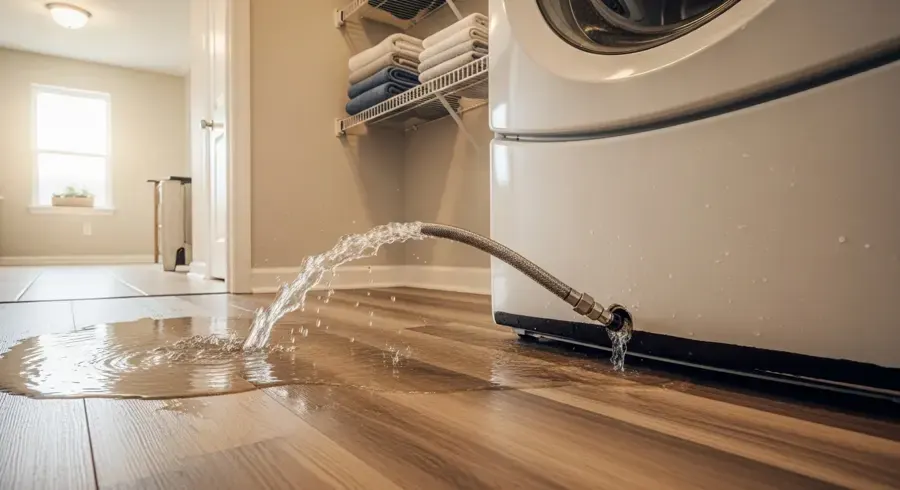
A washer hose or ice-maker line that fails while nobody is home keeps running until someone finds it. The restoration team extracts the water, checks under cabinets and floors and dries everything the leak reached.
(888) 532-4616Washer or dishwasher leak? Call a Duluth pro- Under-cabinet drying
- Hardwood floor mats
- Moisture readings logged
Do this first
First steps for appliance leak cleanup in Duluth
- 1
Close the appliance valve
Washer valves are behind the machine, dishwasher and ice-maker valves are usually under the sink.
- 2
Unplug the appliance
Only if the outlet and your feet are dry. Otherwise cut the breaker.
- 3
Check the floor below
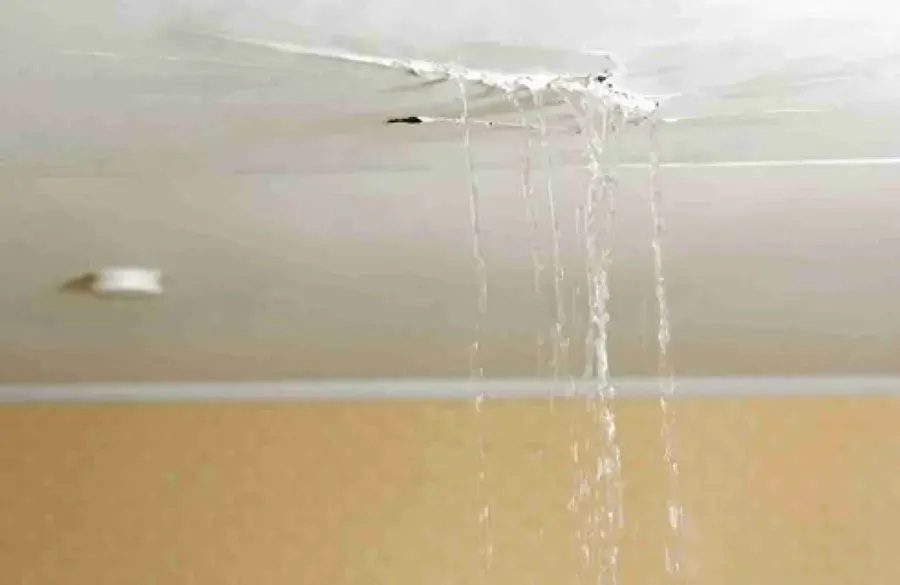
Second-floor laundry leaks often show on the ceiling downstairs.
- 4
Save the failed part
Keep the burst hose or cracked line. It helps with the claim and the repair.
How the work is done
How the restoration team handles appliance leak cleanup
Rapid local response
The response team dispatches 24/7 across Duluth and Gwinnett County, with rapid local response on active water.
IICRC S500 drying standard
IICRC S500 is the industry drying standard. Structural drying, not just surface drying, with equipment sized to the room.
Claim-ready documentation
Moisture maps, daily drying logs and timestamped photos taken before any demolition go into the claim file.
Gwinnett water experts
Attic air handlers, polybutylene supply lines, daylight basements and red clay: the crews know how water moves in a Duluth house.
Typical cost ranges
What does appliance leak cleanup cost in Duluth, GA?
Appliance leak cleanup in Duluth, GA typically runs $600 to $5,000. Costs depend on how long the line ran, whether water got under cabinets or hardwood, whether a second-floor leak reached the ceiling below, and whether the water was clean supply water or gray drain water.
Caught quickly, one room
$600 to $1,500
- Extraction
- Floor and baseboard drying
- Readings logged
Under cabinets or hardwood
$1,500 to $3,500
- Toe-kicks removed for airflow
- Floor drying mats
- Dehumidifier drying
Upstairs leak, two levels
$3,500 to $5,000+
- Ceiling below opened
- Subfloor dried
- Several days of equipment
Ranges are typical, not quotes. For a closer planning number use the water damage cost calculator; the restoration contractor who responds sets the real scope after the walkthrough.
Appliance leaks are among the most common water losses in Duluth homes, condos and townhomes. Rubber washer hoses crack with age, dishwasher supply lines and door seals fail, and the thin plastic line feeding a refrigerator ice maker gets pinched behind the fridge. The water is usually clean supply water, which is good news, but it often runs for hours before anyone notices.
Where appliance water hides
Water from a dishwasher or refrigerator line runs under the cabinets and behind the toe-kicks, where it cannot be seen. Hardwood and laminate absorb it from below and start to cup. A washer leak on a second floor goes through the subfloor into the ceiling below. The tech who does the walkthrough uses meters and thermal imaging to find the edges of the wet area.
- Cabinet toe-kicks are removed so air can reach under the cabinets.
- Hardwood gets specialty drying mats that pull moisture up through the boards.
- Drain water from a washer or dishwasher is treated as Category 2.
The dry-out
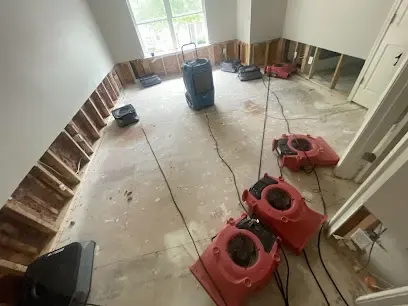
The drying team runs air movers and an LGR dehumidifier sized to the room and records readings every day. Cabinets and floors are dried in place whenever the readings allow, and the equipment comes out once materials reach the drying goal. Most contained appliance leaks dry in three to five days; hardwood takes longer.
Preventing the next leak
Braided stainless washer hoses, a leak sensor behind the washer and a drain pan under upstairs machines prevent most of these losses. The EPA WaterSense leak checklist helps catch slow drips early, and EPA moisture guidance explains why wet cabinets and floors should dry quickly. If the leak came through a ceiling, see ceiling leak water damage, and for hardwood drying, structural drying.
The order of work
How appliance leak cleanup is handled in Duluth
- 1
Map the moisture
The tech who does the walkthrough maps moisture with pinless meters and thermal imaging, then sets the category and class of the loss before any equipment goes down.
- 2
Extract
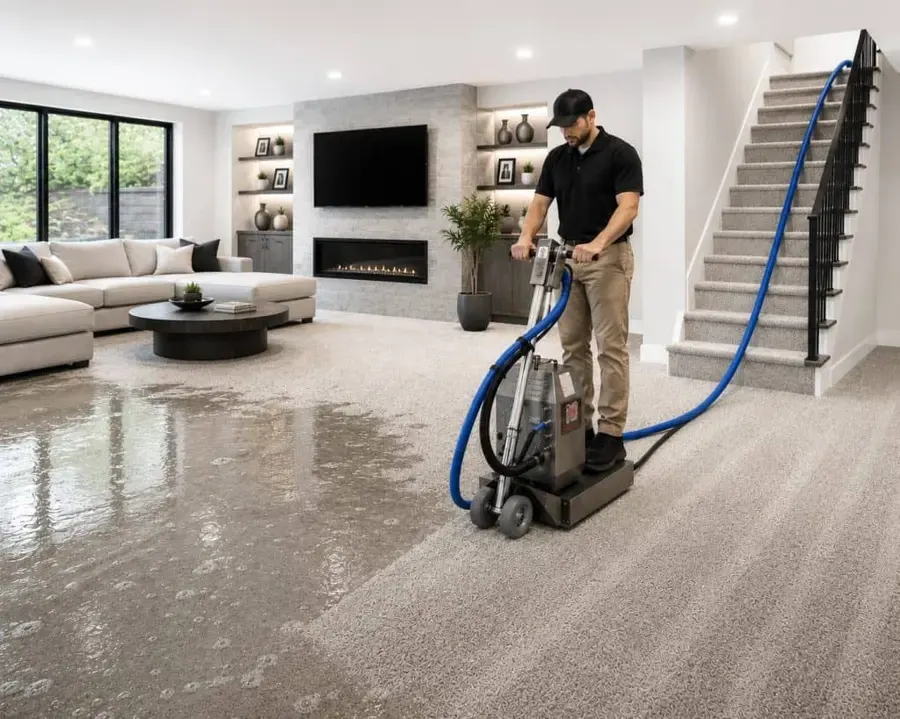
The extraction crew pulls standing water with truck-mounted extraction so it leaves the house instead of wicking into the next room.
- 3
Dry the structure
The drying team sets air movers to each room's evaporation load and runs LGR dehumidifiers, which matters in a humid Georgia summer.
- 4
Verify dry
Crews log readings daily and pull equipment only when wet materials sit within 2 to 4 points of a dry reference material.
Areas served
Covered across Duluth and Gwinnett County
The Duluth restoration team works the whole city, from the Town Green and Pleasant Hill to Sugarloaf and the Chattahoochee side, and out to Suwanee, Johns Creek, Berkeley Lake, Peachtree Corners, Norcross and Lawrenceville.
Duluth ZIP codes 30095, 30096, 30097, 30098 and 30099 are all covered.
See every neighborhood and ZIP codeRelated
Related water damage services in Duluth
Answers
Appliance leak cleanup questions, answered
Can hardwood floors be saved after a dishwasher leak?
Often, if drying starts quickly. Specialty floor mats pull moisture up through the boards while dehumidifiers dry the room. Boards that stay cupped after drying may need refinishing or replacement.
Why do the cabinets need to come apart?
Usually just the toe-kick panels come off, so air can reach the floor under the cabinets. Without that, water trapped under them stays wet for weeks.
Is a washing machine leak clean water?
A burst supply hose is clean water. Water from the drain side or the tub carries soap and dirt and is treated as Category 2.
Does insurance cover appliance leaks?
Sudden leaks from a burst hose or failed line are often covered after the deductible, while the appliance itself and slow leaks often are not. Coverage depends on your policy, so it is worth checking with your own insurer.
How often should washer hoses be replaced?
Rubber hoses are commonly replaced about every five years. Braided stainless hoses last longer and fail far less often.
How long does drying take after an appliance leak?
Three to five days for most contained leaks. Hardwood floors and two-level leaks take longer.
Emergency water removal, Duluth, GA
Appliance leak in your Duluth home?
Close the valve and unplug the machine if it is safe. The extraction crew dries floors, cabinets and ceilings across Gwinnett County.