Vented crawl spaces under Gwinnett homes
Crawl Space Water Damage in Duluth, GA
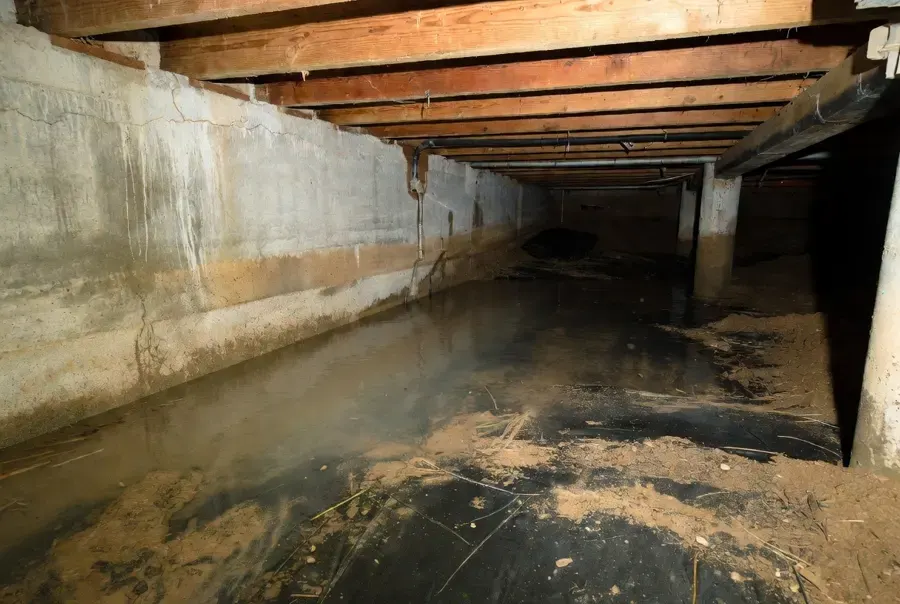
Water under the house is easy to miss until floors cup or a musty smell comes up through the vents. The restoration team pumps the crawl space, pulls wet insulation and dries joists and subfloor from below.
(888) 532-4616Water under the house? Call a Duluth pro- Pump-out under the floor
- Joist and subfloor drying
- Moisture readings logged
Do this first
First steps for crawl space water damage in Duluth
- 1
Do not crawl into standing water
Wiring, sharp debris and contaminated water make a flooded crawl space unsafe to enter.
- 2
Close the main if it is a plumbing leak
Listen for running water under the floor with every tap in the house off.
- 3
Check the floors above
Soft spots, cupping hardwood or a new smell are signs the subfloor is wet.
- 4
Note the weather
Water that shows up after heavy rain points to grading or seepage, not plumbing.
How the work is done
How the restoration team handles crawl space water damage
Rapid local response
The response team dispatches 24/7 across Duluth and Gwinnett County, with rapid local response on active water.
IICRC S500 drying standard
IICRC S500 is the industry drying standard. Structural drying, not just surface drying, with equipment sized to the room.
Claim-ready documentation
Moisture maps, daily drying logs and timestamped photos taken before any demolition go into the claim file.
Gwinnett water experts
Attic air handlers, polybutylene supply lines, daylight basements and red clay: the crews know how water moves in a Duluth house.
Typical cost ranges
What does crawl space water removal cost in Duluth, GA?
Crawl space water damage cleanup in Duluth, GA typically runs $1,200 to $6,500. Cost depends on how much water is standing, the square footage of the crawl space, whether insulation and vapor barrier have to come out, and whether the water is clean or contaminated.
Small plumbing leak
$1,200 to $2,500
- Pump-out and extraction
- Dehumidifier drying
- Joist readings logged
Full crawl space wet
$2,500 to $4,500
- Wet insulation removed
- Vapor barrier replaced
- Several days of drying
Runoff or sewage water
$4,500 to $6,500+
- Category 3 cleanup
- Antimicrobial treatment
- Debris and barrier removal
Ranges are typical, not quotes. For a closer planning number use the water damage cost calculator; the restoration contractor who responds sets the real scope after the walkthrough.
Plenty of Duluth ranches and older two-story homes sit over vented crawl spaces rather than a slab or basement. Supply lines, drain lines and ductwork all run through that space, so a slow leak can drip for weeks before anyone sees it. Heavy summer storms add the other source: runoff that collects in the lowest part of the lot and seeps under the foundation.
What a wet crawl space does to the house
Standing water under the house raises the humidity of the whole floor system. Joists and subfloor absorb it, hardwood above can cup, fiberglass batts sag and fall, and ducts sweat. The tech who does the walkthrough checks joist and subfloor readings from below and floor readings from above to map how far the moisture has spread.
- Standing water is pumped off the vapor barrier first.
- Soaked batt insulation is removed, because it holds water against the subfloor.
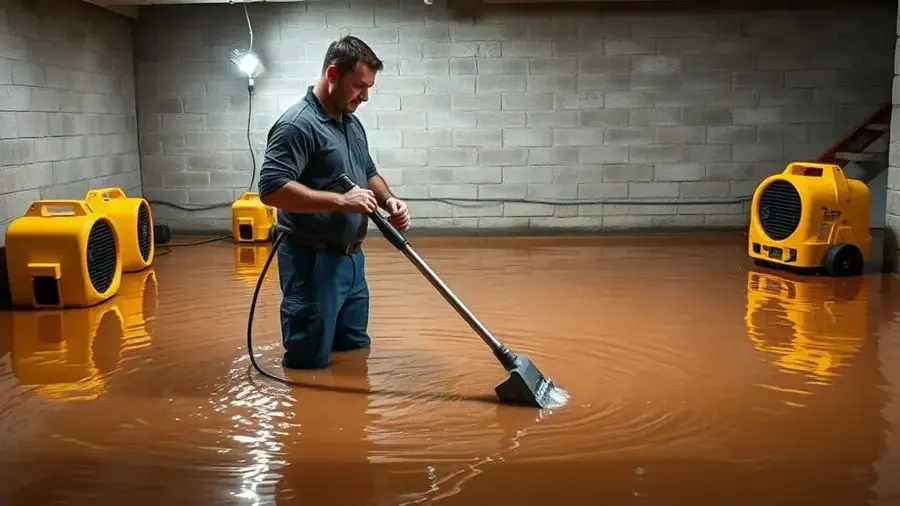
- LGR dehumidifiers run in the closed crawl space with air movers aimed at the wet framing.
Clean water or contaminated water
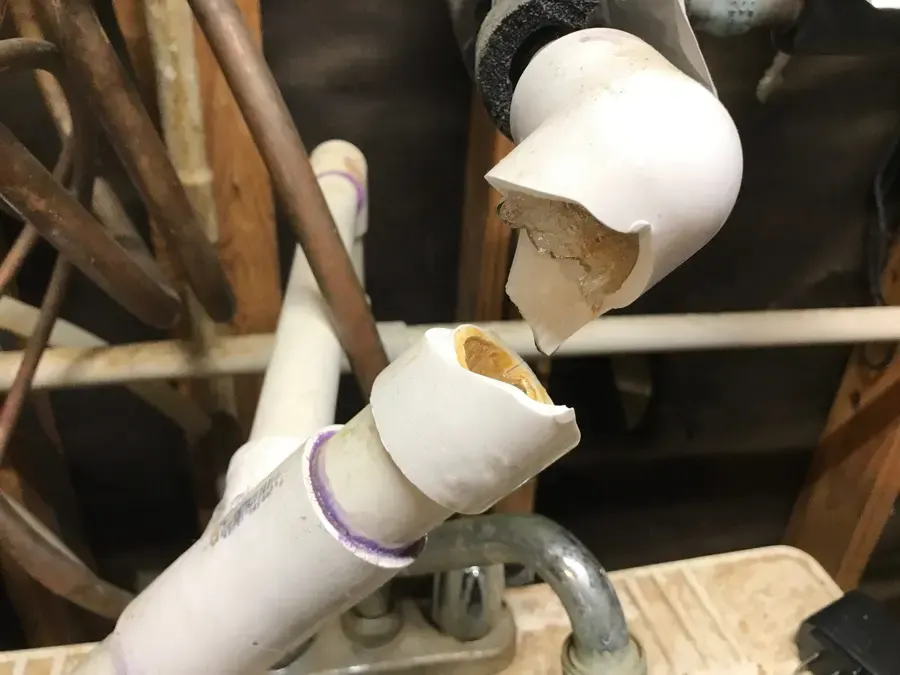
A broken supply line under the house is clean water. A cracked drain line or runoff that crossed the yard is not, and a crawl space with sewage in it is Category 3: the barrier and insulation come out and the soil and framing get an EPA-registered antimicrobial. The sewage backup cleanup page explains that protocol.
Keeping it dry afterward
Grading, gutters and downspout extensions matter as much as the dry-out. UGA Cooperative Extension has Georgia guidance on drainage around homes, and EPA moisture guidance explains why humidity under a house matters. If the water came from a frozen line under the floor, see frozen pipe cleanup.
The order of work
How crawl space water damage is handled in Duluth
- 1
Map the moisture
The tech who does the walkthrough maps moisture with pinless meters and thermal imaging, then sets the category and class of the loss before any equipment goes down.
- 2
Extract
The extraction crew pulls standing water with truck-mounted extraction so it leaves the house instead of wicking into the next room.
- 3
Dry the structure
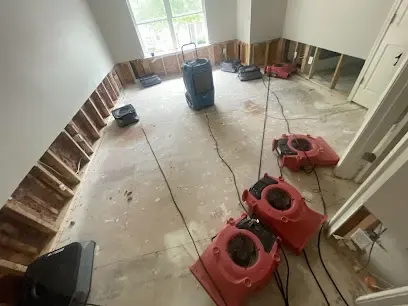
The drying team sets air movers to each room's evaporation load and runs LGR dehumidifiers, which matters in a humid Georgia summer.
- 4
Verify dry
Crews log readings daily and pull equipment only when wet materials sit within 2 to 4 points of a dry reference material.
Areas served
Covered across Duluth and Gwinnett County
The Duluth restoration team works the whole city, from the Town Green and Pleasant Hill to Sugarloaf and the Chattahoochee side, and out to Suwanee, Johns Creek, Berkeley Lake, Peachtree Corners, Norcross and Lawrenceville.
Duluth ZIP codes 30095, 30096, 30097, 30098 and 30099 are all covered.
See every neighborhood and ZIP codeRelated
Related water damage services in Duluth
Answers
Crawl space water damage questions, answered
How do I know if my crawl space has water in it?
Common signs are a musty smell in the house, cupping or soft spots in the floor, higher humidity indoors, and insulation hanging down from the joists. A flashlight look from the access door usually confirms it.
Can a crawl space dry out on its own?
Rarely. Vented crawl spaces pull in humid Georgia air, so standing water and wet framing can stay damp for weeks. A dehumidifier in a closed crawl space dries it far faster.
Does the vapor barrier have to be replaced?
If it is torn, buried in mud or held contaminated water, yes. A clean barrier under a clean-water leak can sometimes be dried and kept.
Will insurance cover crawl space water?
A sudden plumbing break under the house is often covered. Seepage and groundwater usually are not, and outside flooding needs flood coverage. Coverage depends on your policy, so it is worth checking with your own insurer.
How long does crawl space drying take?
Most take three to six days, depending on how wet the joists and subfloor got and how much insulation came out.
What about the ductwork down there?
Ducts that sat in water or dripped condensation are checked, and wet duct insulation is replaced. Water inside a duct run is cleaned out before the system runs normally again.
Emergency water removal, Duluth, GA
Water under your Duluth home?
Do not crawl into standing water. The restoration team pumps and dries crawl spaces across Duluth and Gwinnett County.