Offices, retail, restaurants and multifamily
Commercial Water Damage Restoration in Duluth, GA
A flooded office, storefront or apartment building loses money every day it stays closed. The commercial response team extracts water, dries the building in phases around the people still using it and documents every step for the claim.
(888) 532-4616Commercial water loss in Duluth? Call now- Large-loss extraction
- Phased drying plans
- Daily drying logs
Do this first
First steps for commercial water damage restoration in Duluth
- 1
Shut off the water source
Know where the building main and the fire sprinkler control valve are. Sprinkler work needs the fire protection contractor.
- 2
Protect electrical and equipment
Cut power to wet areas where safe and move computers and inventory off the floor.
- 3
Notify tenants and staff
Keep people out of wet areas and away from ceilings that may be holding water.
- 4
Photograph everything
Wide shots, equipment, inventory and the source. The claim file starts now.
How the work is done
How the restoration team handles commercial water damage restoration
Rapid local response
The response team dispatches 24/7 across Duluth and Gwinnett County, with rapid local response on active water.
IICRC S500 drying standard
IICRC S500 is the industry drying standard. Structural drying, not just surface drying, with equipment sized to the room.
Claim-ready documentation
Moisture maps, daily drying logs and timestamped photos taken before any demolition go into the claim file.
Gwinnett water experts
Attic air handlers, polybutylene supply lines, daylight basements and red clay: the crews know how water moves in a Duluth house.
Typical cost ranges
What does commercial water damage restoration cost in Duluth, GA?
Commercial water damage restoration in Duluth, GA typically runs $3,000 to $50,000 or more. The drivers are the square footage affected, the number of floors and units, the category of water, the materials involved (carpet tile, drywall, ceiling tile, millwork) and how quickly drying started.
Single suite or storefront
$3,000 to $10,000
- Extraction and drying
- Carpet tile and baseboards
- After-hours scheduling
Several suites or units
$10,000 to $30,000
- Phased drying plan
- Ceiling tile and drywall
- Tenant coordination
Multi-floor or Category 3
$30,000 to $50,000+
- Containment
- Large dehumidifier sets
- Detailed loss documentation
Ranges are typical, not quotes. For a closer planning number use the water damage cost calculator; the restoration contractor who responds sets the real scope after the walkthrough.
Duluth has a large commercial footprint for its size: offices and medical suites along Satellite Boulevard and Pleasant Hill Road, retail and restaurants around Gwinnett Place and the Gas South District, light industrial along Peachtree Industrial Boulevard, and big apartment and townhome communities throughout. Water losses there come from failed sprinkler heads, roof drains, rooftop units, supply lines in multi-story buildings and storm runoff.
Keeping the business running
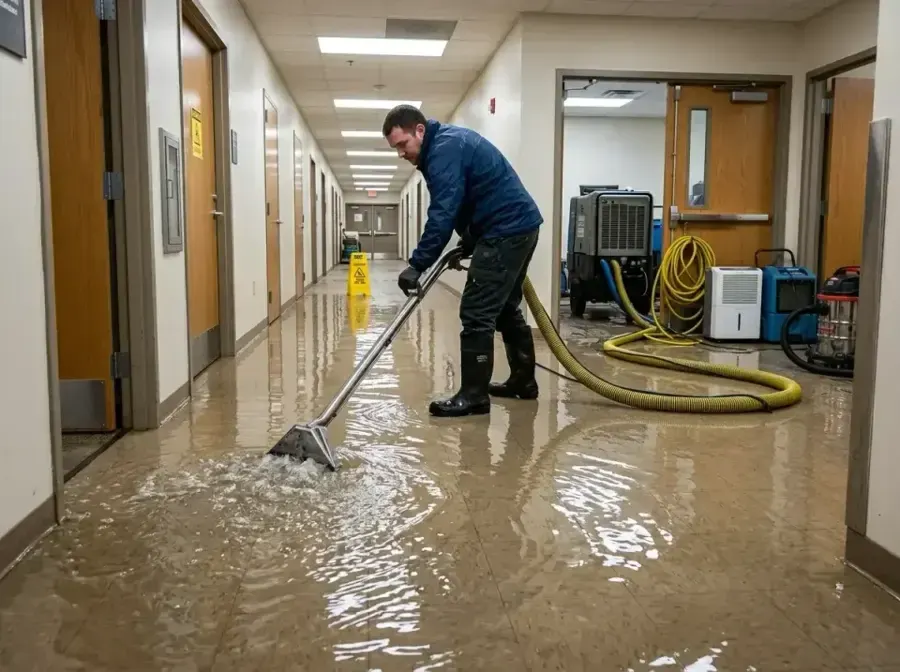
A commercial dry-out is planned around the people in the building. The commercial response team maps moisture across every affected suite, sets up containment where needed, and phases the work so open areas stay usable. Extraction and demolition can often run after hours, and drying equipment is placed to keep walkways and exits clear.
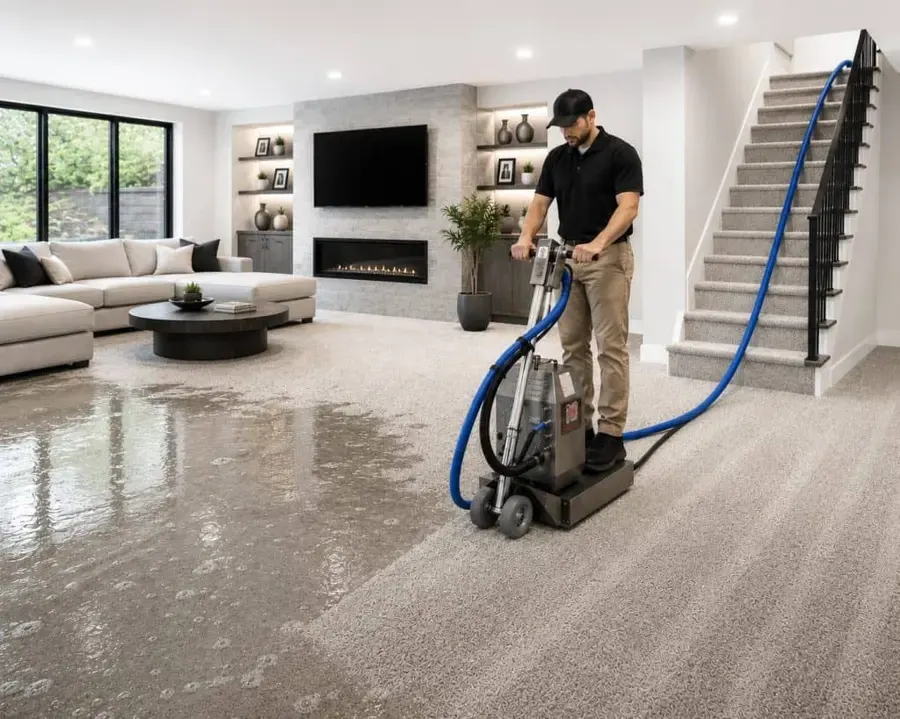
- Carpet tile is lifted and dried or replaced; the slab under it is dried and checked.
- Wet ceiling tile is removed, and grid and plenum space above are checked for water.
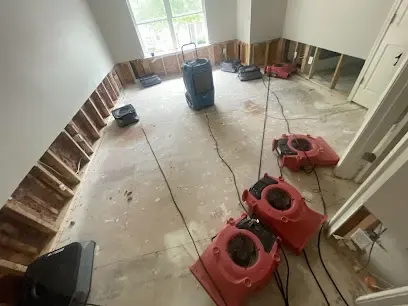
- Large LGR dehumidifier sets and air movers are sized to the open floor area.
Documentation for owners, managers and adjusters
Commercial claims often involve an owner, a property manager, tenants and more than one insurer. Clear moisture maps, daily drying logs, photos before and after demolition and an itemized scope help everyone see the same loss. Ready.gov business preparedness guidance covers planning for water events, and OSHA sets the workplace safety standards that apply during cleanup.
Contaminated water in commercial spaces
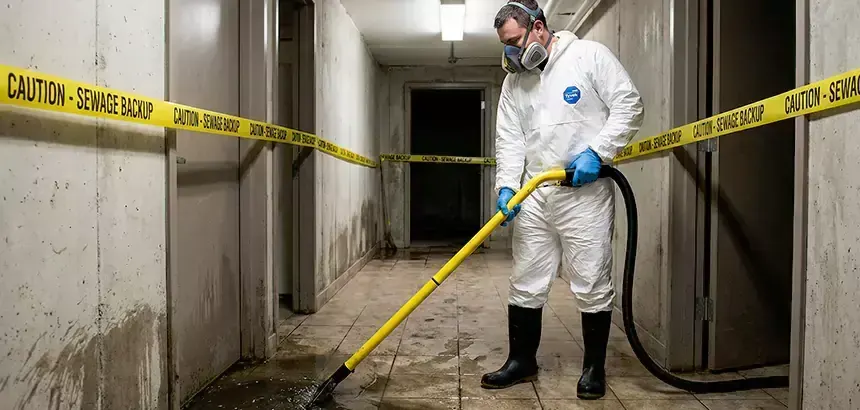
Sewage and storm water in a commercial building are Category 3 and follow the same removal and antimicrobial protocol as a home, with containment to protect occupied areas. See sewage backup cleanup and storm flood cleanup for those details, and structural drying for how drying is measured.
The order of work
How commercial water damage restoration is handled in Duluth
- 1
Map the moisture
The tech who does the walkthrough maps moisture with pinless meters and thermal imaging, then sets the category and class of the loss before any equipment goes down.
- 2
Extract
The extraction crew pulls standing water with truck-mounted extraction so it leaves the house instead of wicking into the next room.
- 3
Dry the structure
The drying team sets air movers to each room's evaporation load and runs LGR dehumidifiers, which matters in a humid Georgia summer.
- 4
Verify dry
Crews log readings daily and pull equipment only when wet materials sit within 2 to 4 points of a dry reference material.
Areas served
Covered across Duluth and Gwinnett County
The Duluth restoration team works the whole city, from the Town Green and Pleasant Hill to Sugarloaf and the Chattahoochee side, and out to Suwanee, Johns Creek, Berkeley Lake, Peachtree Corners, Norcross and Lawrenceville.
Duluth ZIP codes 30095, 30096, 30097, 30098 and 30099 are all covered.
See every neighborhood and ZIP codeRelated
Related water damage services in Duluth
Answers
Commercial water damage questions, answered
Can the business stay open during the dry-out?
Often, yes. Drying is phased, wet areas are contained, and loud work like demolition can be scheduled after hours so unaffected areas keep operating.
What happens when a fire sprinkler goes off?
The sprinkler contractor closes the control valve and resets the system, while extraction starts on the water. Sprinkler water is usually clean at first but often picks up contamination from the pipes, so it is judged at the walkthrough.
Who coordinates with the property manager and tenants?
The restoration contractor who responds typically works with whoever controls the building, shares the drying plan and keeps the moisture logs available to all parties.
Does commercial property insurance cover water damage?
Sudden water damage is commonly covered, and business interruption coverage may apply to lost income. Terms vary widely, so coverage depends on your policy and it is worth checking with your own insurer.
How is carpet tile handled?
Carpet tile can often be lifted, dried and reinstalled after a clean-water loss. After Category 3 water it is removed and replaced.
How long does a commercial dry-out take?
Contained losses usually dry in three to five days. Multi-floor losses and dense materials take longer, and the phased schedule is set at the walkthrough.
Emergency water removal, Duluth, GA
Water in your Duluth business?
Protect people and equipment first. The commercial response team extracts and dries offices, retail and multifamily across Gwinnett County.